Blepharoplasty: Rejuvenate Your Eyes and Restore Your Confidence
Do drooping eyelids make you look constantly tired? Perhaps sagging skin is beginning to obstruct your vision, or persistent under-eye bags are affecting your self-confidence despite adequate rest. These common concerns bring many patients to my London practice seeking eyelid rejuvenation.
Blepharoplasty (eyelid surgery) addresses these issues by precisely removing excess skin and fat while tightening underlying muscles. For upper eyelids, incisions follow natural creases, while lower eyelid incisions are carefully placed just beneath the lash line—ensuring scars remain virtually invisible once healed.
Recovery typically spans 1-2 weeks, with most patients experiencing initial swelling and bruising that gradually subsides. While you may return to desk work within 7-10 days, complete healing continues for several weeks as your refreshed appearance fully emerges.
My approach prioritizes balanced, natural-looking results that complement your facial features rather than creating an artificially “pulled” appearance. This surgical artistry requires understanding each patient’s unique facial anatomy and aesthetic goals.
If you’re considering eyelid surgery, I invite you to schedule a personalised consultation where we’ll discuss your concerns, evaluate your anatomy, and develop a tailored treatment plan. Contact my clinic at 020-XXXX-XXXX to begin your rejuvenation journey.
Table of Contents
- Understanding Blepharoplasty: What to Expect From Surgery
- How to Verify Your Surgeon’s Qualifications and Experience
- Essential Questions to Ask During Your Consultation
- Preparing for Your Blepharoplasty Consultation
- Visual References: What Photos Should You Bring?
- Setting Realistic Expectations for Your Eyelid Surgery
- Pre-Operative Planning: From Consultation to Surgery Day
- After Your Consultation: Next Steps in Your Journey
Understanding Blepharoplasty: What to Expect From Surgery
Blepharoplasty, commonly known as eyelid surgery, is a transformative procedure designed to rejuvenate the appearance of the eyes by addressing excess skin, fat deposits, and muscle laxity. As a Consultant Plastic Surgeon specialising in facial aesthetics, I perform this procedure to help patients achieve a more refreshed, alert appearance while potentially improving peripheral vision in cases where upper eyelid skin hangs over the lash line.
During the procedure, incisions are strategically placed along the natural creases of the eyelids—in the upper eyelid fold for upper blepharoplasty and just below the lash line for lower blepharoplasty. This careful placement ensures that any resulting scars remain well-concealed. Depending on your specific needs, I may remove or reposition fat deposits, tighten underlying muscles, and excise excess skin.
Most blepharoplasty procedures are performed under local anaesthesia with sedation, though general anaesthesia may be preferred in certain cases. The surgery typically takes 1-2 hours, and while it is often performed as a day case, your specific recovery timeline will depend on whether you’ve undergone upper, lower, or combined blepharoplasty. Understanding these basics forms the foundation for your consultation discussion, enabling you to ask more specific, personalised questions about your potential procedure.
How to Verify Your Surgeon’s Qualifications and Experience
When considering blepharoplasty, your surgeon’s qualifications and experience are paramount to achieving safe, natural-looking results. As a minimum standard, ensure your surgeon is registered with the General Medical Council (GMC) and check if they appear on the Specialist Register for Plastic Surgery. The designation FRCS(Plast) indicates Fellowship of the Royal College of Surgeons with specialisation in Plastic Surgery—a crucial credential for anyone performing invasive cosmetic procedures.
Beyond these basic qualifications, inquire about their specific training in oculoplastic or facial aesthetic surgery. A surgeon who regularly performs blepharoplasty will have a substantial portfolio of before-and-after images and patient testimonials. Don’t hesitate to ask how many eyelid surgeries they perform annually and their complication rates—transparency on these matters reflects professional integrity.
Membership in professional bodies such as the British Association of Aesthetic Plastic Surgeons (BAAPS) or the British Association of Plastic, Reconstructive and Aesthetic Surgeons (BAPRAS) indicates adherence to stringent ethical standards and commitment to continuing professional development. Remember that consultation is a two-way process—you should feel comfortable with your surgeon’s communication style and confident in their ability to address your concerns with honesty and clinical expertise.
Essential Questions to Ask During Your Consultation
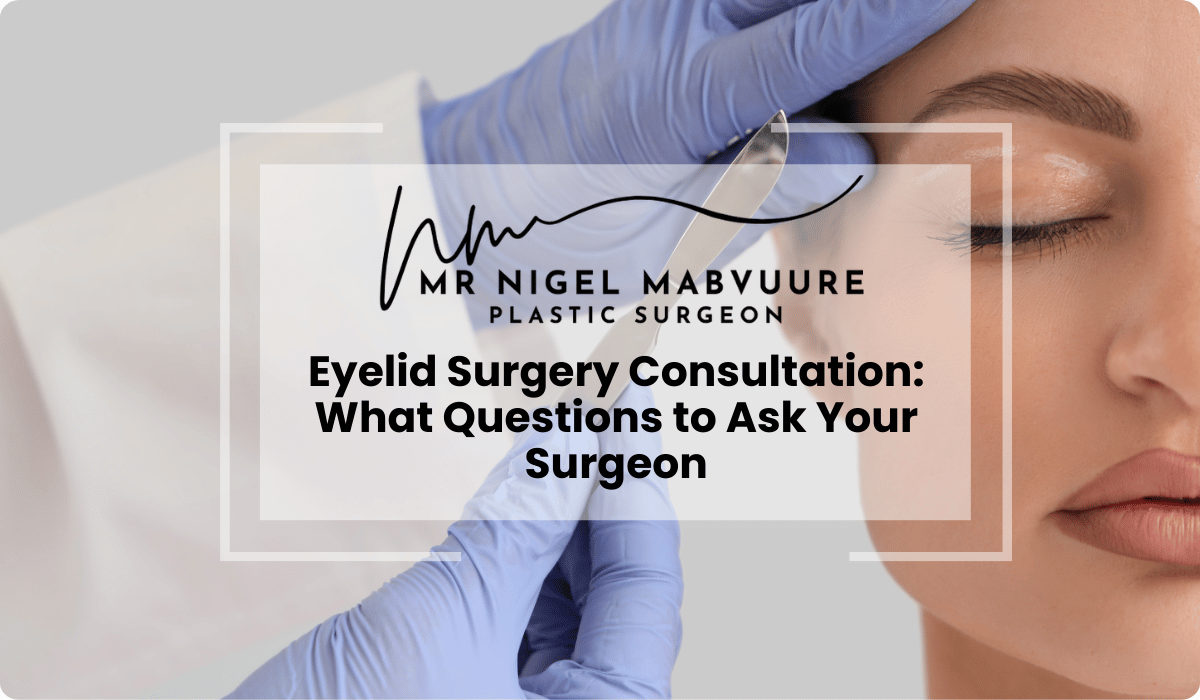
Your blepharoplasty consultation provides a crucial opportunity to gather all necessary information before proceeding with surgery. To maximise this time, prepare a list of questions that address your specific concerns and help you make an informed decision.
Begin with procedure-specific questions: “Am I a suitable candidate for blepharoplasty?” “Would I benefit more from upper, lower, or combined blepharoplasty?” “What surgical technique do you recommend for my specific case?” These questions help establish whether your expectations align with what surgery can realistically achieve.
Safety should be your paramount concern: “What are the potential risks and complications specific to my case?” “How would you manage these complications if they occur?” “What measures do you take to minimise risks?” Understanding the risk-benefit ratio is essential for informed consent.
Recovery planning questions are equally important: “What is the expected recovery timeline?” “When can I return to work and normal activities?” “What postoperative care will I need to follow?” “Will I require assistance during the initial recovery period?” This information helps you plan logistically for your surgery and recovery.
Finally, ask about results: “How long will results last?” “What factors might affect the longevity of my results?” “Will you provide pre and postoperative photographs?” These questions help establish realistic expectations about your surgical outcome. Similar to the approach we take in our breast surgery consultations, I encourage patients to bring a written list to ensure no important questions are overlooked.
Preparing for Your Blepharoplasty Consultation
Thorough preparation for your blepharoplasty consultation ensures you’ll derive maximum benefit from this important meeting. Begin by compiling a comprehensive medical history, including any previous eye conditions, dry eyes, glaucoma, thyroid disorders, or circulatory problems. List all medications, supplements, and vitamins you’re currently taking, as some may need to be temporarily discontinued before surgery to reduce bleeding risks.
Document your specific concerns about your eyelids with precision—whether it’s excess upper eyelid skin obscuring your vision, persistent undereye bags, or fine wrinkles affecting your appearance. Consider keeping a journal noting when these issues are most pronounced (morning puffiness, end-of-day fatigue) to provide your surgeon with detailed insights.
Research blepharoplasty beforehand to familiarise yourself with basic terminology and techniques. This preparation allows for more meaningful discussion during your consultation. However, avoid self-diagnosing or becoming fixated on a particular surgical approach, as your surgeon will recommend the most appropriate technique based on your individual anatomy and goals.
Arrive at your consultation makeup-free to allow for accurate assessment of your natural eyelid contours and skin quality. Consider bringing a trusted friend or family member who can provide emotional support and help remember important details discussed. Finally, prepare questions in advance, prioritising those most important to you in case consultation time is limited.
Visual References: What Photos Should You Bring?
Visual references play a valuable role in communicating your aesthetic goals clearly during your blepharoplasty consultation. I recommend bringing several types of photographs to facilitate productive discussion about your desired outcomes.
First, consider bringing photographs of yourself from 5-10 years ago, when you were more satisfied with your eyelid appearance. These provide insight into your natural facial structure before age-related changes occurred and help establish realistic goals aligned with your natural features. Historical photos also help me understand the progression of your eyelid ageing process, which informs my surgical approach.
Additionally, you might collect images of celebrities or public figures whose eyelid aesthetics you admire. However, approach this with realistic expectations—differences in underlying bone structure, eye shape, and ethnic features mean identical results cannot be guaranteed. These images serve as conversation starters rather than precise templates.
For those with specific concerns about certain expressions or lighting conditions that highlight their eyelid issues, bringing photos that demonstrate these scenarios can be particularly helpful. For example, images showing how your eyelids appear when you’re tired versus well-rested can illustrate the concerns prompting you to seek surgery.
Finally, if you have concerns about avoiding certain looks or outcomes, bringing examples of results you don’t want can be equally informative. Clear communication about both desired and undesired outcomes helps establish mutual understanding and appropriate surgical planning.
Setting Realistic Expectations for Your Eyelid Surgery
Establishing realistic expectations before blepharoplasty is crucial for postoperative satisfaction. While the procedure can dramatically rejuvenate your appearance, understanding its capabilities and limitations will help you approach surgery with an informed perspective.
Blepharoplasty effectively addresses excess skin and fat deposits around the eyes, reducing puffiness and the appearance of tiredness. However, it’s important to understand that it cannot completely eliminate fine lines or crow’s feet, alter the fundamental shape of your eyes, or lift substantially drooping eyebrows—these may require complementary procedures such as botulinum toxin injections, laser resurfacing, or a brow lift.
Results from blepharoplasty are long-lasting but not permanent. The natural ageing process continues, and factors such as sun exposure, smoking, and genetics influence how your results evolve over time. Most patients enjoy their refreshed appearance for 5-10 years before considering revision surgery, though individual experiences vary considerably.
Recovery expectations require equal clarity—anticipate temporary swelling, bruising, dry eyes, and light sensitivity. These symptoms typically resolve within 2-3 weeks, but residual swelling may persist longer. Full aesthetic results become apparent after several months when all swelling has subsided. During your consultation, I’ll provide a personalised assessment of your anatomy and discuss what specific improvements you can realistically expect based on your unique features and concerns.
Pre-Operative Planning: From Consultation to Surgery Day
The period between your consultation and surgery day involves important preparatory steps to ensure optimal surgical outcomes. Following your consultation, you’ll receive comprehensive pre-operative instructions tailored to your specific health needs and planned procedure. These typically include medication adjustments—particularly discontinuing blood-thinning medications like aspirin and certain supplements that increase bleeding risk, with your GP’s approval where necessary.
Laboratory tests may be required, especially for patients over 50 or those with pre-existing health conditions. These typically include blood tests and potentially an ECG to ensure you’re medically fit for surgery. For smokers, cessation is mandatory at least 4 weeks before and after surgery, as smoking significantly impairs healing and increases complication risks.
In the two weeks preceding surgery, begin preparing your recovery environment. Stock up on recommended supplies such as cold compresses, artificial tears, gentle cleaners for the eye area, and any prescribed medications. Arrange for someone to drive you home after surgery and ideally stay with you for the first 24 hours.
The night before surgery, follow specific instructions regarding fasting (typically nothing to eat or drink after midnight). Remove all eye makeup thoroughly and cleanse the surgical area as directed. Have your post-operative medications ready, and ensure you’ve completed all paperwork and financial arrangements. Proper pre-operative planning not only contributes to surgical success but also provides peace of mind as you approach your procedure.
After Your Consultation: Next Steps in Your Journey
Following your blepharoplasty consultation, you’ll enter a critical decision-making and preparation phase. Take time to reflect on the information provided during your consultation—reviewing your surgical plan, expected outcomes, potential risks, and recovery timeline. If additional questions arise during this reflection period, don’t hesitate to contact my practice for clarification.
For many patients, a second consultation proves valuable for addressing follow-up concerns or reviewing specific aspects of the proposed procedure in greater detail. This is particularly recommended if you’re considering multiple procedures or have complex medical considerations. During this period, you might also wish to seek a second opinion from another qualified plastic surgeon, which is a prudent step for any elective surgical procedure.
Once you’ve decided to proceed, my team will guide you through scheduling your procedure date and arranging a pre-operative assessment approximately two weeks before surgery. You’ll receive detailed written instructions covering medication adjustments, lifestyle modifications, and practical arrangements for your recovery period.
Use this preparatory period to optimise your health—maintain proper nutrition, stay well-hydrated, and ensure adequate rest. Consider practical arrangements such as taking appropriate time off work, arranging for childcare if needed, and preparing your recovery space with necessary supplies and comforts. Remember that thorough preparation contributes significantly to a smooth surgical experience and optimal recovery.
Frequently Asked Questions
How long does blepharoplasty surgery take?
Blepharoplasty typically takes 1-2 hours to complete, depending on whether you’re having upper, lower, or combined eyelid surgery. The procedure is usually performed as a day case, meaning you can go home the same day, though your specific surgery time may vary based on your individual needs and surgical plan.
What type of anesthesia is used for eyelid surgery?
Most blepharoplasty procedures are performed under local anesthesia with sedation, which numbs the eye area while keeping you comfortable and relaxed. General anesthesia may be recommended in certain cases, particularly for more extensive procedures or based on patient preference. Your surgeon will discuss the most appropriate anesthesia option during your consultation.
What is the recovery timeline after blepharoplasty?
Recovery after blepharoplasty typically involves 2-3 weeks of noticeable healing, with temporary swelling, bruising, dry eyes, and light sensitivity being common. Most patients can return to work and light activities within 7-10 days, though residual swelling may persist longer. Complete results become fully apparent after several months when all swelling has subsided.
How long do results from eyelid surgery last?
Blepharoplasty results are long-lasting but not permanent. Most patients enjoy their refreshed appearance for 5-10 years before considering revision surgery. The natural aging process continues after surgery, and factors such as sun exposure, smoking, and genetics influence how your results evolve over time. Upper eyelid results typically last 5-7 years, while lower eyelid results often last longer.
What qualifications should I look for in a blepharoplasty surgeon?
Look for a surgeon who is registered with the General Medical Council (GMC) and appears on the Specialist Register for Plastic Surgery. The designation FRCS(Plast) indicates Fellowship of the Royal College of Surgeons with specialization in Plastic Surgery. Membership in professional bodies such as BAAPS or BAPRAS also indicates adherence to high standards. Ask about their specific training in oculoplastic surgery and how many eyelid procedures they perform annually.
Can blepharoplasty improve my vision?
Upper blepharoplasty can potentially improve peripheral vision in cases where excess eyelid skin hangs over the lash line and obstructs sight. If visual field obstruction is documented, the procedure might be considered medically necessary rather than purely cosmetic. However, blepharoplasty primarily addresses cosmetic concerns and is not designed to correct other vision problems like nearsightedness or astigmatism.
What should I do to prepare for blepharoplasty surgery?
Preparation includes stopping blood-thinning medications (with your GP’s approval), quitting smoking at least 4 weeks before surgery, completing required medical tests, arranging for someone to drive you home post-surgery, and setting up your recovery space with necessary supplies like cold compresses and artificial tears. Follow your surgeon’s specific fasting instructions the night before surgery and remove all eye makeup thoroughly before arriving for your procedure.