Essential Guidance for Your Breast Surgery Journey
When considering breast surgery, these critical points will help ensure the best possible experience and outcomes:
- Preparation is crucial – Compile your complete medical history, gather previous imaging results, and clearly define your aesthetic goals before your first appointment.
- Expect thorough assessment – A comprehensive consultation includes detailed physical examination, discussion of goals, explanation of surgical options, and analysis of potential outcomes.
- Ask informed questions – Inquire about your surgeon’s qualifications, preferred techniques, potential complications, recovery expectations, and realistic results for your specific case.
- Consider all options carefully – Evaluate different surgical approaches, implant choices (if applicable), and incision patterns based on your anatomy and desired outcomes.
- Understand total costs – Request a detailed breakdown of all expenses, including surgeon’s fees, facility charges, anesthesia, and post-operative care.
- Prioritize surgeon selection – Verify credentials, specific experience with your procedure, hospital privileges, and personal rapport when choosing your surgeon.
- Plan for recovery – Arrange support for post-surgery care, prepare your home environment, and follow all pre-operative instructions to ensure optimal healing.
Remember that successful breast surgery results from the combination of skilled surgical expertise, clear communication, appropriate technique selection, and dedicated post-operative care. Take time to make informed decisions at each stage of your journey.
Table of Contents
- Preparing for Your Initial Breast Surgery Consultation
- What Happens During a Breast Surgery Consultation?
- Essential Questions to Ask Your Breast Surgeon
- Evaluating Your Breast Surgery Options and Outcomes
- Understanding the Costs and Financing of Breast Surgery
- How to Choose the Right Breast Surgeon for Your Needs
- Next Steps After Your Breast Surgery Consultation
Preparing for Your Initial Breast Surgery Consultation
A successful breast surgery begins with thorough preparation for your initial consultation. This critical first meeting sets the foundation for your entire treatment journey, making proper breast surgery preparation essential.
Before your appointment, compile a comprehensive medical history, including previous surgeries, current medications, allergies, and any family history of breast cancer or related conditions. If you’ve had mammograms or other breast imaging studies, arrange for these records to be available to your surgeon.
Consider your aesthetic goals carefully. Many patients find it helpful to bring photographs depicting their desired outcome, though it’s important to maintain realistic expectations. Wearing comfortable, loose-fitting clothing to your appointment will facilitate easier examination.
Make a list of questions and concerns you wish to address during your breast surgery assessment. Topics might include recovery time, potential complications, and expected outcomes. This preparation demonstrates your commitment to the process and helps your surgeon provide personalised recommendations.
Finally, consider bringing a trusted friend or family member to your consultation. They can provide emotional support, help remember important information, and offer a second perspective when making decisions about your breast procedure consultation.
What Happens During a Breast Surgery Consultation?
Your breast surgery consultation typically lasts between 45 minutes to one hour, providing ample time for a comprehensive evaluation. The appointment begins with completing necessary paperwork, including your medical history and consent forms.
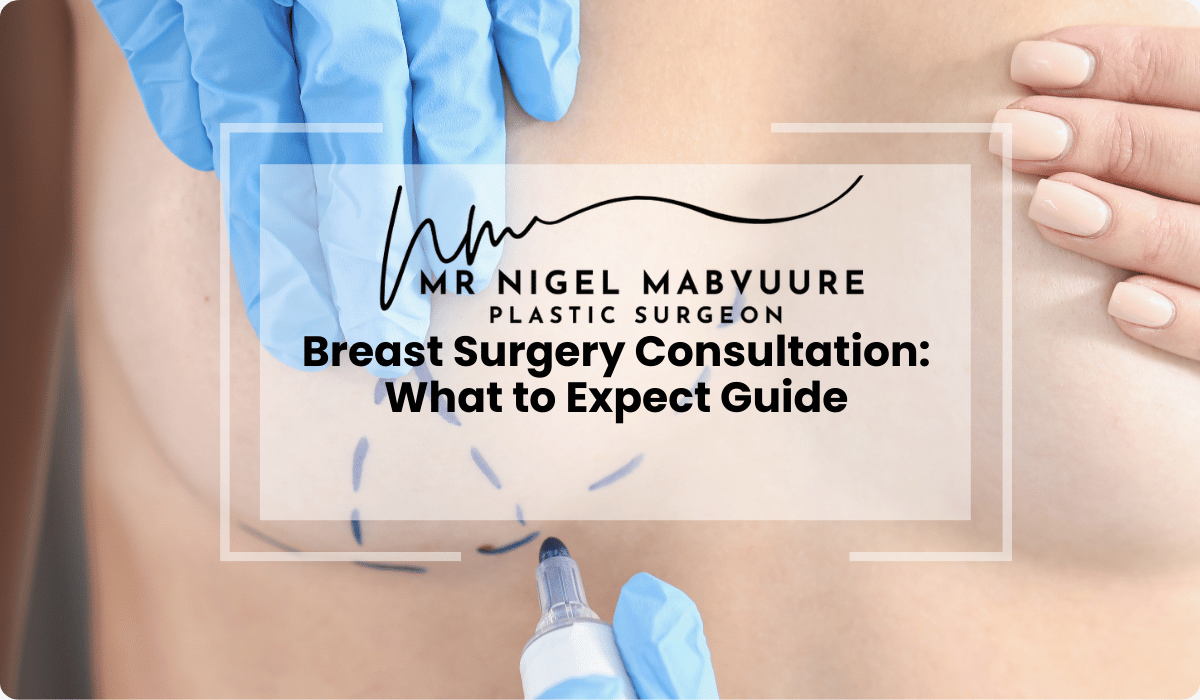
During the clinical assessment portion, your surgeon will conduct a thorough physical examination of your breast tissue, measuring dimensions and assessing factors such as skin elasticity, tissue quality, and nipple position. This detailed breast surgery evaluation helps determine which surgical approaches might best achieve your goals.
The consultation includes an in-depth discussion about your motivations and expectations. Your surgeon will explain various surgical techniques applicable to your situation, whether you’re considering breast augmentation, reduction, lift, or reconstruction. They’ll outline potential implant types, sizes, and placement options if relevant to your procedure.
Your surgeon will also discuss potential risks and complications, recovery expectations, and realistic outcomes. Many practices offer 3D imaging technology to visualise potential results, though these simulations provide approximations rather than guarantees.
Before concluding, you’ll discuss practical matters such as scheduling, cost estimates, and pre-operative requirements. This comprehensive approach ensures you leave with a clear understanding of what breast surgery entails for your specific circumstances.
Essential Questions to Ask Your Breast Surgeon
Coming prepared with thoughtful questions ensures you gain maximum value from your breast surgery consultation. These inquiries help clarify expectations and build confidence in your decision-making process.
Regarding qualifications, ask: “Are you board-certified in plastic surgery?” and “How many breast procedures like mine do you perform annually?” Understanding your surgeon’s specific expertise with your desired procedure provides crucial context for their recommendations.
About the procedure itself, consider asking: “Which technique do you recommend for my specific anatomy and goals?” and “What incision pattern would you use and why?” These questions reveal your surgeon’s approach to personalisation and their technical preferences.
Safety concerns should be addressed through questions like: “What complications might occur with this procedure?” and “How would these complications be managed?” Transparent discussion about risks demonstrates your surgeon’s commitment to informed consent.
Recovery questions might include: “What restrictions will I have after surgery and for how long?” and “When can I return to work and normal activities?” This information helps with practical planning for your post-operative period.
Finally, ask about results: “May I see before and after photos of patients with similar body types to mine?” and “How long will my results last?” These questions help establish realistic expectations for both immediate outcomes and long-term satisfaction with your breast surgery.
Evaluating Your Breast Surgery Options and Outcomes
Effective breast surgery decision making requires careful consideration of all available options against your specific goals and anatomy. During your consultation, your surgeon will outline several potential approaches, each with distinct advantages and considerations.
For breast augmentation, you’ll need to evaluate implant types (silicone vs. saline), shapes (round vs. anatomical), textures, sizes, and placement options (subglandular vs. submuscular). Each combination produces different aesthetic and functional outcomes. Some patients might also be candidates for fat transfer augmentation, which uses your body’s natural tissue instead of implants.
Breast lift (mastopexy) procedures offer various incision patterns—from periareolar to anchor-shaped—each appropriate for different degrees of ptosis (sagging). Your surgeon will recommend the approach that balances minimal scarring with optimal reshaping for your tissue characteristics.
For breast reduction, similar incision considerations apply, along with decisions about technique—whether traditional or using newer approaches like vertical or lollipop patterns. These choices affect not only appearance but also sensation preservation and breastfeeding potential.
Your surgeon should provide detailed explanations of how each option might influence your final results, including shape, symmetry, scarring, and longevity. They should also discuss how factors like pregnancy, weight fluctuations, and ageing might affect your outcomes over time. This thorough breast surgery evaluation ensures your expectations align with realistic possibilities.
Understanding the Costs and Financing of Breast Surgery
The financial aspect of breast surgery requires careful consideration as part of your planning process. Costs vary considerably depending on procedure complexity, surgeon expertise, geographical location, and facility fees.
A comprehensive breast augmentation consultation will include a detailed breakdown of all expenses. These typically include the surgeon’s fee, anaesthesia costs, hospital or surgical facility charges, implant costs (if applicable), pre-operative tests, post-operative garments, and follow-up appointments. The total investment for breast surgery in the UK generally ranges from £5,000 to £8,000, though more complex procedures may exceed this range.
During your consultation, enquire whether the quoted price is all-inclusive or if additional charges might arise. Understanding exactly what’s covered protects you from unexpected expenses. Also ask about the practice’s policy regarding revision surgery costs, should adjustments become necessary.
Many practices offer financing options to make breast surgery more accessible. These typically include payment plans, medical loans through third-party financing companies, or credit arrangements. Be sure to understand the interest rates, repayment terms, and any penalties associated with these options.
While cost is an important consideration, it should not be the primary factor in your decision-making process. Selecting a surgeon based solely on lower fees may compromise safety and results. Balance financial considerations against qualifications, experience, and your comfort with the surgical team.
How to Choose the Right Breast Surgeon for Your Needs
Selecting the ideal surgeon represents one of the most consequential decisions in your breast surgery journey. This choice significantly influences both your safety and satisfaction with results.
Begin by verifying credentials and specialised training. In the UK, look for membership with the British Association of Plastic, Reconstructive and Aesthetic Surgeons (BAPRAS) or the British Association of Aesthetic Plastic Surgeons (BAAPS). These affiliations indicate adherence to rigorous professional standards. Additionally, confirm that your surgeon holds specialist registration in plastic surgery with the General Medical Council.
Experience specifically with your desired procedure is crucial. A surgeon may be highly skilled in rhinoplasty but perform relatively few breast procedures. Ask how frequently they perform the specific breast surgery you’re considering and request to see before and after photographs of their previous patients.
Hospital privileges offer another indicator of a surgeon’s standing within the medical community. Even if your procedure will be performed at an outpatient facility, ensuring your surgeon maintains privileges at accredited hospitals suggests they meet certain quality standards.
Beyond technical qualifications, evaluate your personal rapport with potential surgeons. Effective communication, attentiveness to your concerns, and willingness to answer questions thoroughly indicate a surgeon who values patient education and involvement. The ideal surgeon combines technical excellence with approachability, making you feel comfortable and confident throughout your breast surgery assessment and beyond.
Next Steps After Your Breast Surgery Consultation
Following your breast procedure consultation, you enter a critical decision-making phase requiring thoughtful reflection and possibly additional research. Many patients find it beneficial to review the information provided, including any brochures, before-and-after photographs, and personal notes taken during the appointment.
If you’ve consulted with multiple surgeons, compare their recommendations, approaches, and the rapport you experienced with each. Significant differences in suggested techniques or implant sizes warrant further investigation—perhaps through follow-up questions or even a second consultation.
Once you’ve selected your surgeon, you’ll typically meet with a patient coordinator to schedule your procedure and discuss practical arrangements. This includes confirming the surgery date, reviewing pre-operative instructions, arranging time off work, and finalising payment details.
In the weeks before surgery, complete any requested medical tests and follow specific preparation guidelines. These might include adjustments to medications, dietary restrictions, or lifestyle modifications such as smoking cessation. Your surgeon may also prescribe medications to be filled prior to your procedure date.
Prepare your home for recovery by arranging a comfortable resting area, stocking up on recommended supplies, and ensuring you have appropriate post-operative garments. Organise assistance for at least the first 24-48 hours after surgery, as mobility and independence will be temporarily limited.
Remember that reputable surgeons welcome ongoing communication during this preparation period. Don’t hesitate to contact the practice with any questions or concerns that arise as you progress through your breast surgery planning journey.
Frequently Asked Questions
How long before my desired surgery date should I schedule a consultation?
Schedule your breast surgery consultation 3-6 months before your ideal surgery date. This timeframe allows for thorough evaluation, potential additional appointments, pre-operative testing, and sufficient time to prepare both physically and mentally for your procedure. Popular surgeons often have waiting lists for both consultations and surgeries, so planning ahead ensures you can secure your preferred timing.
Will my health insurance cover breast surgery?
Health insurance typically covers breast surgery only when deemed medically necessary, such as breast reduction for back pain relief or post-mastectomy reconstruction. Purely cosmetic procedures like aesthetic augmentation or lifts are generally not covered by insurance. During your consultation, the practice’s financial coordinator can help determine if any portion of your procedure might qualify for coverage based on your specific insurance policy and medical circumstances.
How do I know if I’m a good candidate for breast surgery?
Good candidates for breast surgery are in overall good health, maintain a stable weight, don’t smoke, have realistic expectations, and have specific concerns that can be addressed surgically. Ideal candidates have fully developed breasts, understand both the benefits and limitations of breast procedures, and are pursuing surgery for personal rather than external reasons. Your consultation will include a comprehensive assessment of your medical history, physical examination, and discussion of goals to determine your candidacy for specific breast procedures.
How painful is recovery from breast surgery?
Recovery from breast surgery typically involves moderate discomfort rather than severe pain, with the most significant discomfort occurring during the first 3-5 days post-operation. Pain levels vary by procedure type—breast reductions often involve more discomfort than augmentations—and your surgeon will prescribe appropriate pain management medications. Most patients transition to over-the-counter pain relief within one week. Techniques such as cold compresses, proper support garments, and following activity restrictions help minimize discomfort during the recovery period.
Will I need someone to accompany me to my breast surgery consultation?
While not mandatory, having a companion attend your breast surgery consultation is highly recommended. A trusted friend or family member can provide emotional support, help remember important information, ask questions you might forget, and offer an objective perspective when discussing options. They can also take notes during the appointment, allowing you to focus fully on your conversation with the surgeon rather than documenting details about procedures, recovery expectations, and costs.
How can I best prepare for showing my breasts during the consultation?
To prepare for the physical examination during your breast consultation, wear comfortable, loose-fitting clothing that’s easy to remove. Most practices provide a medical gown and ensure privacy during the examination. Remember that surgeons conduct these assessments professionally and clinically—they evaluate hundreds of patients annually. If you feel anxious, communicate your concerns to the medical staff, who can take additional measures to ensure your comfort. Some practices allow a chaperone or your personal companion to be present during the examination if you prefer.
What happens if I’m not satisfied with the consultation or want a second opinion?
If you’re not completely satisfied with your initial breast surgery consultation, seeking a second opinion is both common and advisable. Reputable surgeons understand and respect this decision, as it demonstrates your commitment to making an informed choice. You’re under no obligation to proceed with a surgeon after consultation, even if you’ve paid a consultation fee. Request copies of any imaging or assessments to share with your next surgeon, reducing the need for duplicate tests. Consider consultations with 2-3 different surgeons to gain perspective on various approaches before making your final decision.