Upper Eyelid Surgery Scars: What to Expect for Optimal Healing
Drooping upper eyelids can cause both cosmetic concerns and functional vision problems, affecting your confidence and quality of life. As patients consider blepharoplasty, questions about scarring often become a primary concern. Will the scars be visible? How long will they take to heal? Could they affect your appearance in the long term?
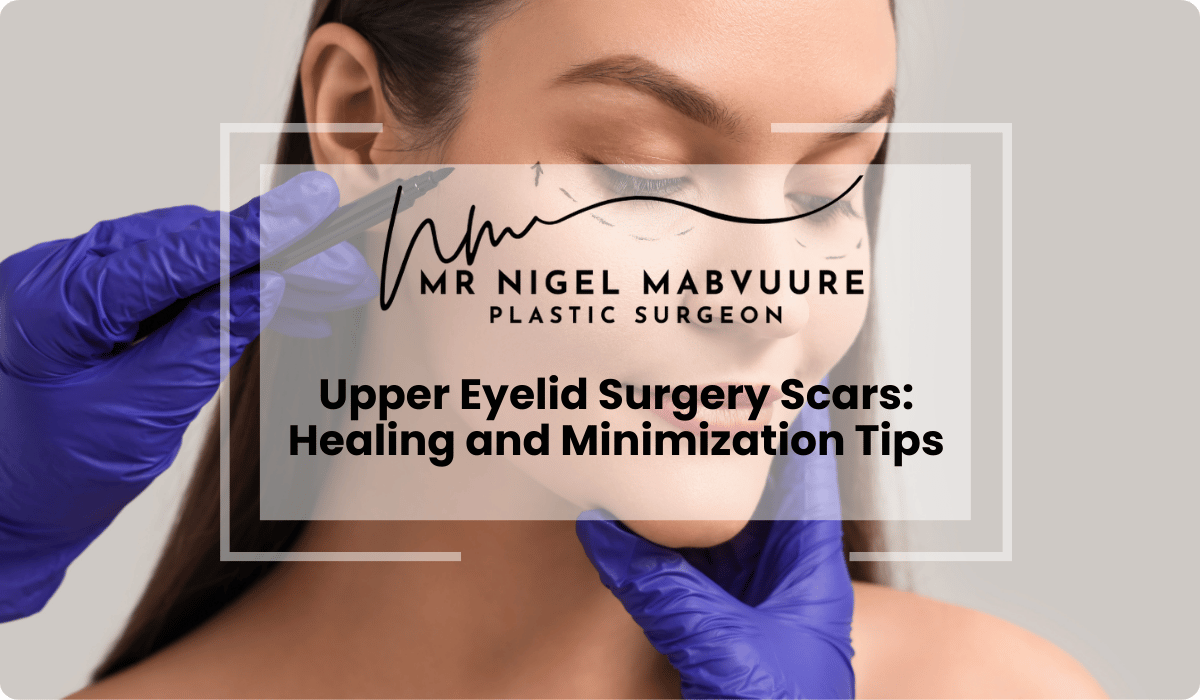
Upper blepharoplasty involves precise incisions along the natural crease of your eyelid, allowing for the removal of excess skin and fat that creates that heavy, hooded appearance. This strategic placement means that once healed, scars remain concealed within your natural eyelid fold when your eyes are open.
Recovery typically progresses through several phases, with initial healing taking 1-2 weeks. During this time, you’ll notice the incisions transitioning from red lines to increasingly subtle marks. Most patients find their scars become nearly imperceptible within 6-12 months, thanks to the eyelid’s excellent healing capacity.
My approach focuses on achieving a refreshed, natural-looking result that maintains your facial harmony while ensuring the most discreet scarring possible. Every procedure is tailored to your unique facial structure and aesthetic goals.
If you’re concerned about how eyelid surgery might affect your appearance, I welcome you to schedule a personal consultation to discuss your specific concerns and explore whether upper blepharoplasty is right for you.
Table of Contents
- Understanding Upper Eyelid Surgery and Potential Scarring
- Where Are Blepharoplasty Incisions Placed for Minimal Scarring?
- The Typical Healing Timeline for Eyelid Surgery Scars
- Do Upper Eyelid Surgery Scars Completely Disappear?
- Effective Post-Surgery Care to Promote Scar Healing
- Advanced Treatments for Minimizing Blepharoplasty Scars
- Factors That Influence Upper Eyelid Scar Appearance
- When to Consult Your Surgeon About Scar Concerns
Understanding Upper Eyelid Surgery and Potential Scarring
Upper eyelid surgery, or upper blepharoplasty, is a refined procedure designed to address excess skin and fat that can create a hooded appearance and potentially impair vision. As a Consultant Plastic Surgeon specialising in facial aesthetics, I understand that many patients considering this procedure have concerns about visible scarring.
The nature of eyelid surgery necessitates creating incisions to remove excess tissue, but these are strategically placed within the natural contours of the eyelid. The upper eyelid’s thin skin and excellent blood supply generally facilitate optimal healing with minimal scarring. The incision typically follows the natural crease of the upper eyelid, measuring approximately 1-2 centimetres in length.
While all surgical procedures invariably result in some form of scarring, blepharoplasty is renowned for producing exceptionally discreet scars. The delicate periorbital tissues tend to heal remarkably well compared to other facial regions. Most patients experience minimal visible scarring that becomes increasingly subtle with time.
Understanding the balance between effective tissue removal and minimally visible scarring is crucial. An experienced surgeon prioritises both functional improvement and aesthetic outcomes, creating incisions that will be virtually undetectable once fully healed.
Where Are Blepharoplasty Incisions Placed for Minimal Scarring?
The art of successful blepharoplasty lies significantly in strategic incision placement. For upper eyelid surgery, incisions are meticulously positioned within the natural eyelid crease—a location that provides optimal access for tissue removal while ensuring the resulting scar remains concealed when the eyes are open.
The upper eyelid crease typically sits approximately 8-10mm above the lash line in Caucasian patients, though this measurement varies among different ethnic backgrounds. This crease represents the anatomical junction where the levator muscle’s fibres connect to the skin, creating a natural fold that disguises the incision line.
In cases where excess skin extends laterally, the incision may be extended slightly beyond the lateral canthus (outer eye corner), carefully placed within existing crow’s feet lines to maintain invisibility. For patients with significant tissue laxity, the incision design adapts to address the specific anatomical presentation while still adhering to concealment principles.
The precision of these incisions cannot be overstated. By following the natural contours of the eyelid and respecting the anatomical landmarks, the resulting scar becomes virtually imperceptible once healing is complete. This careful placement represents a fundamental principle in achieving the balance between effective tissue removal and aesthetic outcomes in blepharoplasty procedures.
The Typical Healing Timeline for Eyelid Surgery Scars
Eyelid surgery scar healing progresses through distinct phases, each representing an important stage in the overall recovery process. Understanding this timeline helps patients maintain realistic expectations during their recovery journey.
Initial Recovery (Days 1-7): Immediately after surgery, patients can expect some swelling, bruising, and visible incision lines. The sutures are typically removed between 5-7 days post-procedure, depending on the healing progression. During this phase, the incisions may appear red and slightly raised.
Early Healing (Weeks 1-4): As swelling continues to subside, the incision lines begin their transition from red to pink. By the end of the first month, most patients can comfortably return to their regular activities, including wearing makeup to camouflage any remaining visible signs of surgery.
Progressive Improvement (Months 1-3): The scars continue to fade from pink to a lighter hue during this period. The incision lines become flatter and less noticeable as the collagen remodelling process advances. Many patients notice significant improvement in scar appearance by the three-month mark.
Maturation Phase (Months 3-12): The final phase of healing involves continued scar maturation. The incision lines gradually fade further, often becoming barely perceptible by 6-12 months post-surgery. The periorbital area’s excellent blood supply facilitates this exceptional healing capacity.
It’s important to note that while this timeline represents the typical progression, individual healing rates vary based on age, skin type, genetics, and adherence to post-operative care instructions.
Do Upper Eyelid Surgery Scars Completely Disappear?
The question of whether upper eyelid surgery scars completely disappear requires a nuanced response. While technically, no surgical scar ever completely vanishes in the strictest sense, upper blepharoplasty scars can become virtually imperceptible under normal circumstances.
The exceptional healing characteristics of eyelid tissue contribute significantly to this outcome. The thin, delicate skin of the eyelid contains abundant blood vessels that facilitate optimal healing conditions. Additionally, the natural crease of the upper eyelid provides an ideal concealment location for the incision.
For most patients, by 6-12 months post-surgery, the scars mature into fine, pale lines that blend seamlessly with the surrounding tissue. When the eyes are open, these scars typically remain hidden within the natural eyelid fold. Even with closed eyes, the mature scars generally appear as subtle, fine lines that most casual observers would not recognise as surgical scars.
It’s worth noting that certain factors can influence the final appearance of these scars. Patients with darker skin tones may experience hyperpigmentation along the incision lines, though this typically resolves with time. Similarly, those with a genetic predisposition to hypertrophic scarring may require additional interventions to achieve optimal results.
In my clinical experience, when patients inquire about scar visibility during consultations, I often need to point out well-healed scars on previous patients, as they are frequently unable to detect them independently—a testament to how inconspicuous these scars typically become.
Effective Post-Surgery Care to Promote Scar Healing
Diligent post-operative care significantly influences the quality of scar healing following upper eyelid surgery. Adhering to these evidence-based practices can promote optimal healing and minimise visible scarring.
Immediate Post-Operative Period: Cold compresses applied intermittently during the first 48 hours help reduce swelling and minimise tissue trauma. Keeping the head elevated, including during sleep, further facilitates reduced oedema and promotes better circulation to the healing tissues.
Wound Care: Following your surgeon’s specific instructions regarding cleaning the incision sites is paramount. Typically, this involves gentle cleansing with prescribed solutions and the application of antibiotic ointment to prevent infection and maintain a moist healing environment. Avoid rubbing or stretching the incision lines.
Sun Protection: Ultraviolet exposure can significantly worsen scarring and cause hyperpigmentation. Diligently protect the incision sites from sun exposure for at least 12 months post-surgery. When outdoors, wear sunglasses with UV protection and consider a wide-brimmed hat for additional coverage.
Nutritional Support: Proper nutrition facilitates optimal healing. Ensure adequate protein intake and consider foods rich in vitamins C and E, zinc, and omega-3 fatty acids, which support collagen synthesis and tissue repair processes.
Hydration and Smoking Cessation: Maintain proper hydration to support tissue healing, and strictly avoid smoking, as nicotine significantly impairs wound healing by reducing blood flow to the tissues.
Once sutures are removed, your surgeon may recommend gentle massage techniques or silicone-based products to further enhance scar maturation. Advanced scar management techniques might be introduced as healing progresses, particularly for patients with challenging healing characteristics.
Advanced Treatments for Minimizing Blepharoplasty Scars
While most blepharoplasty scars heal exceptionally well with standard care, several advanced treatments can further enhance scar appearance for patients seeking optimal results or those experiencing suboptimal healing.
Topical Silicone Products: Silicone-based gels and sheets represent first-line therapy for immature scars. These products create an occlusive environment that hydrates the scar tissue while regulating fibroblast activity and collagen production. For eyelid scars, silicone gels are generally preferred over sheets due to the area’s contours.
Corticosteroid Preparations: For scars showing early signs of hypertrophy or excessive redness, topical or intralesional corticosteroids may be recommended. These compounds reduce inflammation and inhibit collagen synthesis in overactive scars, helping to flatten and fade the affected tissue.
Laser Therapy: Various laser modalities offer significant benefits for blepharoplasty scar refinement:
- Pulsed dye lasers effectively target persistent redness by treating vascular components
- Fractional lasers stimulate collagen remodelling and improve texture
- Q-switched lasers address hyperpigmentation issues
Microneedling: This collagen induction therapy creates controlled micro-injuries that stimulate the body’s natural wound healing processes. When performed by skilled professionals, microneedling can significantly improve scar texture and appearance once the initial healing phase is complete.
Platelet-Rich Plasma (PRP): Derived from the patient’s own blood, PRP contains growth factors that enhance tissue regeneration. It can be applied topically following microneedling or injected directly into problematic scar tissue to accelerate remodelling.
The optimal timing for these interventions varies based on the specific treatment and individual healing characteristics. Most advanced treatments are initiated only after the initial healing phase is complete, typically 6-12 weeks post-surgery.
Factors That Influence Upper Eyelid Scar Appearance
The final appearance of upper eyelid surgery scars varies considerably among patients due to multiple influential factors. Understanding these elements helps establish realistic expectations and identifies potential challenges requiring proactive management.
Genetic Predisposition: Perhaps the most significant determinant of scarring outcomes is genetic tendency. Some patients naturally form fine, nearly invisible scars, while others are predisposed to hypertrophic or keloid scarring. Family history of problematic scarring serves as a valuable predictor of potential challenges.
Age and Skin Characteristics: Younger patients typically possess greater skin elasticity and healing capacity, potentially resulting in less visible scarring. Skin type also plays a crucial role—thinner, fair skin often develops less noticeable scars compared to thicker or darker skin, which may be more prone to hyperpigmentation or hypertrophic responses.
Surgical Technique: The precision of incision placement, tissue handling, and closure method significantly impacts scar formation. Meticulous surgical technique that minimises tissue trauma and creates precise wound edge approximation promotes optimal healing. The specific suturing materials and techniques employed also influence early scar formation.
Post-Operative Complications: Wound infections, dehiscence (separation of the wound edges), or haematoma formation can compromise healing and result in more prominent scarring. Prompt recognition and management of these complications is essential for minimising their impact on long-term scar appearance.
Environmental and Behavioural Factors: Smoking significantly impairs wound healing by reducing tissue oxygenation. Similarly, nutritional deficiencies, certain medications (particularly corticosteroids and immunosuppressants), and chronic medical conditions like diabetes can adversely affect the healing process and subsequent scar formation.
Understanding these factors allows for personalised pre-operative assessment and customised post-operative care protocols to optimise scar outcomes for each individual patient.
When to Consult Your Surgeon About Scar Concerns
While some degree of scarring is an inevitable aspect of any surgical procedure, certain signs warrant prompt consultation with your surgeon. Recognising these indicators ensures timely intervention for optimal aesthetic outcomes.
Persistent Redness Beyond 3 Months: While initial redness is expected, scars that remain prominently red beyond three months post-surgery may indicate prolonged inflammation. Early intervention with appropriate treatments can prevent this from becoming a permanent characteristic of the scar.
Progressive Thickening or Elevation: Scars should gradually flatten and soften over time. If you notice your scar becoming increasingly raised, thickened, or firm, this may indicate hypertrophic scar formation requiring prompt management with corticosteroid injections or other targeted therapies.
Widening of the Scar: Eyelid surgery scars should remain as fine lines. Significant widening of the scar may indicate suboptimal wound healing or excessive tension across the wound, potentially benefiting from early revision considerations.
Persistent Pain, Itching, or Discomfort: While mild discomfort during healing is normal, persistent pain, significant itching, or unusual sensations around the scar may indicate nerve involvement or other complications requiring evaluation.
Asymmetry or Contour Irregularities: If you notice significant differences between the scars on each eyelid or irregular contours developing along the incision lines, consult your surgeon to assess whether intervention is warranted.
Psychological Impact: If your scar appearance causes significant psychological distress or affects your confidence, regardless of its objective appearance, discussing your concerns with your surgeon is important. Various treatment options exist that can improve both the physical appearance of the scar and your emotional well-being.
Remember that early intervention often yields the best results when addressing scar concerns. Most reputable surgeons include regular follow-up appointments as part of your surgical journey, providing opportunities to discuss any emerging concerns about your healing process.
Frequently Asked Questions
How visible are upper eyelid surgery scars?
Upper eyelid surgery scars are typically very discreet. They’re strategically placed within the natural eyelid crease (8-10mm above the lash line), making them virtually invisible when your eyes are open. Once fully healed (6-12 months post-surgery), the scars mature into fine, pale lines that blend with surrounding tissue. Most patients report that even with eyes closed, the scars are difficult for others to detect.
How long does it take for upper eyelid surgery scars to heal?
Upper eyelid surgery scars follow this typical healing timeline:
- Days 1-7: Initial swelling, bruising, and visible red incision lines
- Weeks 1-4: Incisions transition from red to pink as swelling subsides
- Months 1-3: Scars flatten and continue fading
- Months 3-12: Final maturation phase, becoming barely perceptible
Complete maturation generally occurs within 6-12 months, though individual healing rates vary.
What can I do to minimize scarring after upper eyelid surgery?
To minimize scarring after upper eyelid surgery:
- Apply cold compresses during the first 48 hours
- Keep your head elevated, even while sleeping
- Follow your surgeon’s wound care instructions precisely
- Protect the incision from sun exposure for at least 12 months
- Maintain proper nutrition and hydration
- Avoid smoking completely
- Consider silicone-based products once sutures are removed
These practices promote optimal healing and minimize visible scarring.
When should I be concerned about my blepharoplasty scars?
Consult your surgeon if you notice:
- Redness persisting beyond 3 months
- Progressive thickening or elevation of the scar
- Significant widening of the incision line
- Persistent pain, itching, or unusual discomfort
- Noticeable asymmetry between eyelids
- Any sign of infection (increased redness, warmth, discharge)
Early intervention for these issues typically leads to better outcomes.
Do darker skin tones develop more visible eyelid surgery scars?
Patients with darker skin tones may experience temporary hyperpigmentation (darkening) along incision lines, though this typically resolves with time. The risk of keloid or hypertrophic scarring varies more by genetic predisposition than skin tone alone. Your surgeon can assess your individual risk factors and may recommend preventative treatments such as silicone products, corticosteroid preparations, or laser therapy to optimize results for your specific skin characteristics.
Can I wear makeup to cover my eyelid scars during healing?
Most surgeons advise avoiding makeup directly on incision sites for at least 2 weeks after surgery to prevent infection and irritation. Once your surgeon confirms proper initial healing (typically at your follow-up appointment), you can generally begin using makeup to camouflage any remaining redness or discoloration. Choose hypoallergenic products and apply gently without pulling on the delicate eyelid tissue. Always remove makeup thoroughly before sleep to promote optimal healing.